

Diving into the latest tectonic shift in enterprise AI. Google just revealed Gemini 4 Argon.
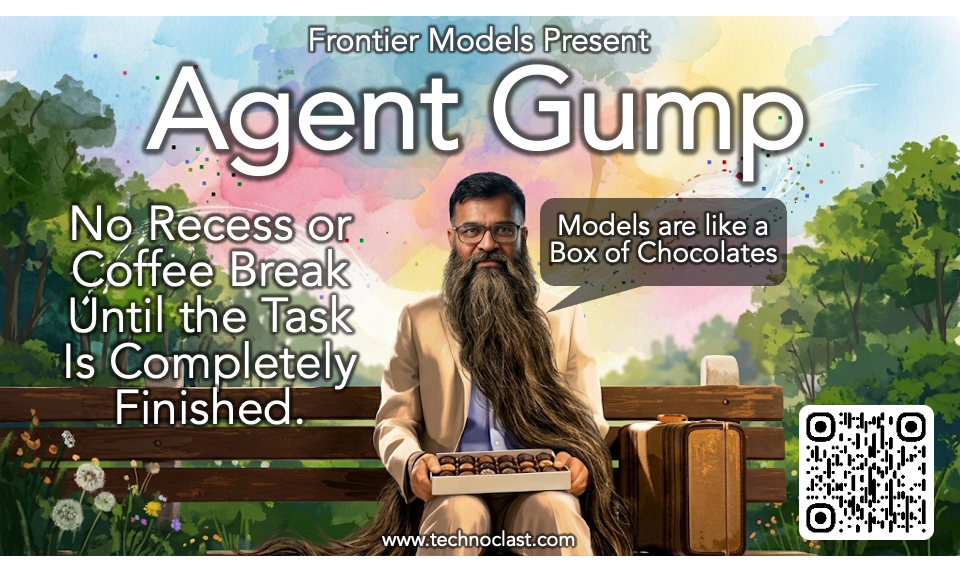
It is not just another chatbot upgrade. It supposedly represents a fundamental leap in how artificial intelligence handles complex long-horizon workflows in data, cloud computing and enterprise architecture.
From the available material out there in world wild web, let us briefly explore what this means for us.
What is Gemini 4 Argon?
It’s Google’s newest & most advanced frontier AI model. The system claim to shift away from simple conversational prompts to deep multi-agent reasoning. The standout feature is its massive output capacity.
It can process and churn out up to 1 million tokens in a single trajectory. This allows the model to handle massive reasoning tasks without needing to coffee break them down into smaller interactions. It is built for autonomy. Argon does not just answer questions. It plans steps, executes them, checks its own work and refines the output.
What purpose is it better suited for?

Argon is explicitly designed as an enterprise model rather than a simple consumer assistant. It shines in areas demanding high-level knowledge work.
Software Engineering
Argon excels at debugging, algorithm design and large-scale code migrations. Google is already using it to migrate hundreds of thousands of lines of C++ code to Rust in the Fuchsia kernel.
Cybersecurity Defense
The model can autonomously find, validate and patch critical software vulnerabilities. Through targeted early release programs like Fairwind, trusted security teams can use Argon to remediate exposures in critical infrastructure.
Complex Professional Work
It leads industry benchmarks like the Vals Index for performance in finance, legal research and tax work.
Deep Multimodal Processing
Argon can analyze professional charts, process lengthy videos and synthesize data across multiple documents to generate finished enterprise outputs.
How it differs from the other top two frontier models?
The AI landscape is dominated by OpenAI & Anthropic. Argon differentiates itself from these top competitors through its agentic autonomy and sheer output scale.
Massive Output Window
While competitors offer large context windows for input, Argon provides a 1 million token limit for output. This lets it write entire software modules or comprehensive research reports in one go.
Autonomous Multi-Agent Design
Competitor models often function as copilots requiring constant human steering. Argon operates as a multi-agent system that tests and refines its own work with minimal human oversight.
Security-First Rollout
Instead of a massive consumer launch, Google is releasing Argon primarily to trusted cybersecurity defenders first. They are even providing a version without typical cyber guardrails to empower defensive security teams.
The new edge for Google Gemini

Beyond its raw benchmark scores, Argon fundamentally changes the Gemini ecosystem. It transforms Gemini from a versatile search tool into a serious enterprise architecture component.
Long-Horizon Workflows
Earlier Gemini models were great at immediate tasks. Argon gives Google an edge in executing workflows that span hours or days.
True Multimodal Reasoning
The model deeply understands visual inputs like technical architecture diagrams or financial charts deeply enough to execute tasks based on them rather than just describing them.
Enterprise Confidence
By deploying advanced monitoring for misalignment and partnering with external security firms like Wiz, Google is positioning Gemini as the most secure foundation for enterprise automation.
So.. So. Gemini 4 Argon is a signal that the era of AI copilots is shifting into the era of AI agents. For professionals in data and enterprise architecture, it is time to start planning how autonomous systems can handle the heavy lifting in your tech stack.