

30 minutes.
That is roughly how long it takes for a kitchen, restaurant, or factory floor to grind to a halt once the gas cylinder runs out.
No flame.
No cooking.
No production.
Across India alone, hundreds of millions of LPG cylinders move through supply chains every year. Yet shortages still appear suddenly in cities and towns, leaving households and businesses scrambling.
The immediate reaction is usually frustration.
The more interesting question is this:
Did the shortage really come without warning?
In most cases, the signals were already there.
Demand was building.
Ordering patterns were shifting.
Seasonal events were approaching.
The supply chain simply failed to read the signals in time.
This edition explores how demand driven forecasting changes that equation and why planning for the unexpected has become a core capability for modern supply chain professionals.
1. Demand Driven Forecasting
Most traditional supply chains follow a simple planning cycle.
Look at last month’s sales
Estimate next month’s demand
Place orders accordingly
This approach is often called forecast push planning. It relies heavily on historical averages.
The problem is obvious.
Planning based only on the past assumes the future will look similar.
Real markets rarely behave that way.
Demand driven forecasting takes a very different approach.
Instead of relying primarily on historical averages, it uses live demand signals to adjust forecasts continuously.
These signals often include:
Point of sale data
Distributor orders
Customer bookings
Market events
Weather forecasts
Local economic activity
The objective is simple.
Detect demand shifts early enough to act before shortages occur.
A simple analogy
Imagine a kirana store owner watching customer behavior closely.
She notices two consistent patterns:
When school exams begin, families cook more meals at home
During local festivals, gas refill requests rise by around 40 percent
Instead of waiting for inventory to run out, she increases orders in advance.
That is demand driven thinking.
Not reacting to shortages.
Preventing them.
2. The Gas Cylinder
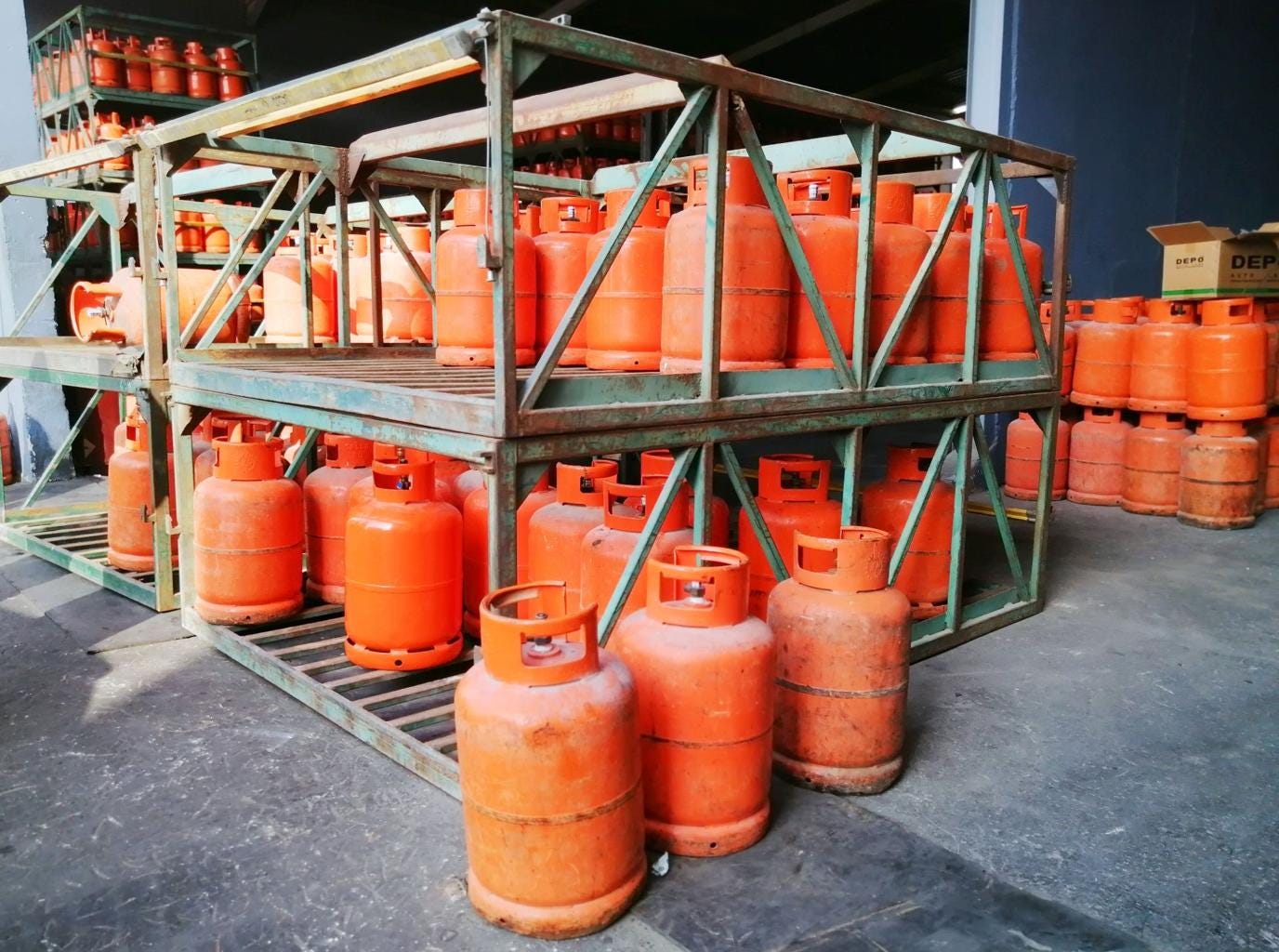
At first glance, LPG demand looks predictable.
People cook every day.
Households refill cylinders regularly.
In reality, demand is influenced by several complex forces.
1. Seasonal demand spikes
Consumption increases during certain periods.
Examples include:
Winter months when households heat water more frequently
Major festivals such as Diwali, Eid, Christmas, and Pongal
Peak catering seasons
Even though these spikes occur every year, supply chains still struggle to plan for them effectively.
2. Volatile commercial demand
Restaurants and catering businesses introduce sudden demand surges.
Typical triggers include:
Wedding seasons
Large sports tournaments
Food festivals
Religious gatherings
Local consumption can jump 30 to 50 percent within days.
3. Invisible refill clusters
Many housing complexes follow synchronized refill cycles.
For example:
Residents order refills on the first day of each month
Distributors experience a sudden surge in demand
Without visibility into these patterns, shortages appear quickly.
4. Rapid growth in new users
Urban expansion introduces thousands of new LPG connections in short periods.
When supply chains designed for steady demand face sudden growth, inventory buffers disappear rapidly.
3. When the Unexpected Arrives
The concept of the black swan was popularized by Nassim Nicholas Taleb.

A black swan event has three characteristics:
It falls outside normal expectations
It arrives with little warning
It creates disproportionate impact
In supply chains, black swans expose hidden fragility.
Common black swan disruptions in gas supply chains
Industrial accidents
A fire or safety incident shuts down a refilling plant
Entire districts lose supply capacity
Extreme weather events
Floods or cyclones disrupt transport routes
Demand rises exactly when logistics fail
Fuel substitution shocks
Electricity price spikes push households back to LPG
Pandemic driven consumption shifts
During lockdowns, home cooking increases dramatically
Transport disruptions
Truck strikes or infrastructure failures block deliveries
The important insight is this:
Individual disruptions are unpredictable.
Disruption itself is predictable.
4. How Does It Help?
Demand driven forecasting is not just a planning tool.
It acts as an early warning system.
1. Real time demand sensing
Continuous monitoring detects anomalies quickly.
For example:
A sudden 60 percent increase in cylinder orders in a region
Demand rising above seasonal norms
This allows planners to respond days or weeks earlier.
2. Intelligent buffer stock design
Not all markets behave the same.
Demand driven models calculate buffer levels based on:
Demand volatility
Customer density
Supply lead times
Urban distributors often require larger buffers than rural ones.
3. Multi source supplier networks
Forecasting models reveal supply bottlenecks.
Organizations can then build redundancy through:
Multiple refilling plants
Alternative transport routes
Regional distribution hubs
Redundancy is not inefficiency.
It is insurance.
4. Scenario simulation and stress testing
Advanced planning systems allow teams to test scenarios such as:
Demand doubling within 30 days
Supplier disruptions for two weeks
Transport cost increases of 25 percent
Running these simulations before a crisis ensures teams already know how to respond.
5. Collaborative demand visibility
A gas cylinder travels through several supply chain nodes:
Refinery
Bottling plant
Regional depot
Distributor
Customer
Demand driven forecasting connects these nodes through shared data signals.
When distributor orders surge, upstream suppliers see it immediately.
This synchronization dramatically improves responsiveness.
5. Practical Steps
Restaurants, bakeries, hospitals, and catering businesses cannot afford sudden gas shortages.
Several simple practices can reduce operational risk.
1. Track consumption patterns
Maintain a weekly usage log.
Within a few months, patterns usually become visible.
2. Maintain a safety buffer
Never operate with zero reserve cylinders.
A simple rule:
Reorder when the last cylinder is opened, not when it is empty.
3. Diversify suppliers
Relying on a single distributor creates unnecessary risk.
Maintaining relationships with two suppliers provides backup.
4. Communicate demand early
Inform distributors in advance about:
Large catering orders
Seasonal spikes
Special events
Demand information often travels too slowly in supply chains.
Early communication helps everyone plan better.
5. Participate in forecasting programs
Some distributors offer collaborative demand forecasting programs.
Businesses that share forward demand estimates often receive supply priority during shortages.
6. Antifragile Supply Chains
There is a concept beyond resilience.
Antifragility.
An antifragile system does not just survive shocks.
It becomes stronger because of them.
In an antifragile gas supply chain:
Shortage events feed new data into forecasting models
Buffer policies improve continuously
Alternative suppliers are qualified
Transport redundancy expands
Demand sensing becomes sharper
Each disruption becomes a learning event.
Industries such as pharmaceuticals, food manufacturing, and energy distribution are already building supply chains this way.
The tools exist.
The data exists.
What is often missing is the willingness to invest in planning before a crisis occurs.
Key Takeaways
Demand driven forecasting replaces historical planning with real time demand signals.
Gas cylinder supply chains appear simple but hide complex demand dynamics including seasonal spikes and commercial surges.
Black swan disruptions cannot be predicted individually, but the presence of disruption is inevitable.
Combining demand sensing, buffer stock strategies, multi source suppliers, and collaborative forecasting creates resilient supply chains.
Businesses can start small by tracking consumption, maintaining buffers, diversifying suppliers, and sharing demand information early.
Closing Thought
A gas cylinder shortage may appear like a minor inconvenience.
In reality, it reveals a much larger supply chain truth.
When planning assumes tomorrow will look like yesterday, systems become fragile.
Demand driven forecasting does not claim to predict every disruption.
What it does provide is the ability to:
Detect change earlier
Respond faster
Build supply chains that do not collapse when the unexpected arrives
Because the real question is never whether disruption will happen.
Only when.